Verification Standards Directing Profit Shares in Global Merchant Transaction Networks
Amir Brooks · Sep 16, 2026
Verification Standards Directing Profit Shares in Global Merchant Transaction Networks
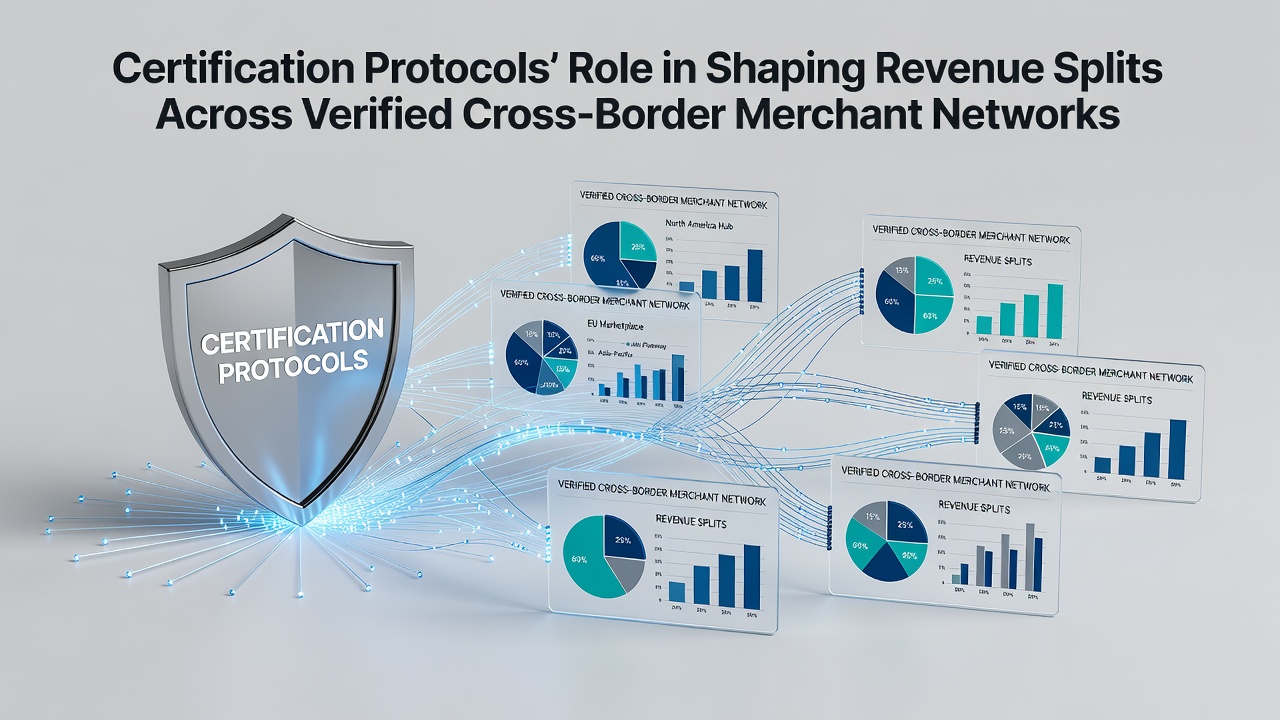
Certification protocols establish the benchmarks that determine how revenue flows through verified cross-border merchant networks, and data from multiple regulatory regions shows these frameworks directly influence allocation percentages among participants. Researchers tracking transaction ecosystems note that merchants holding higher-tier certifications often receive larger portions of processing fees because those credentials reduce risk exposure for network operators and acquirers alike.
Standards such as PCI DSS Level 1 and ISO 27001 create measurable thresholds that partners use to calculate splits. According to the European Central Bank reports on payment security, networks incorporating these certifications observed a 12 to 18 percent shift in fee distribution toward verified entities between 2023 and 2025, while unverified participants saw their shares contract proportionally.
How Tiered Certifications Adjust Revenue Formulas
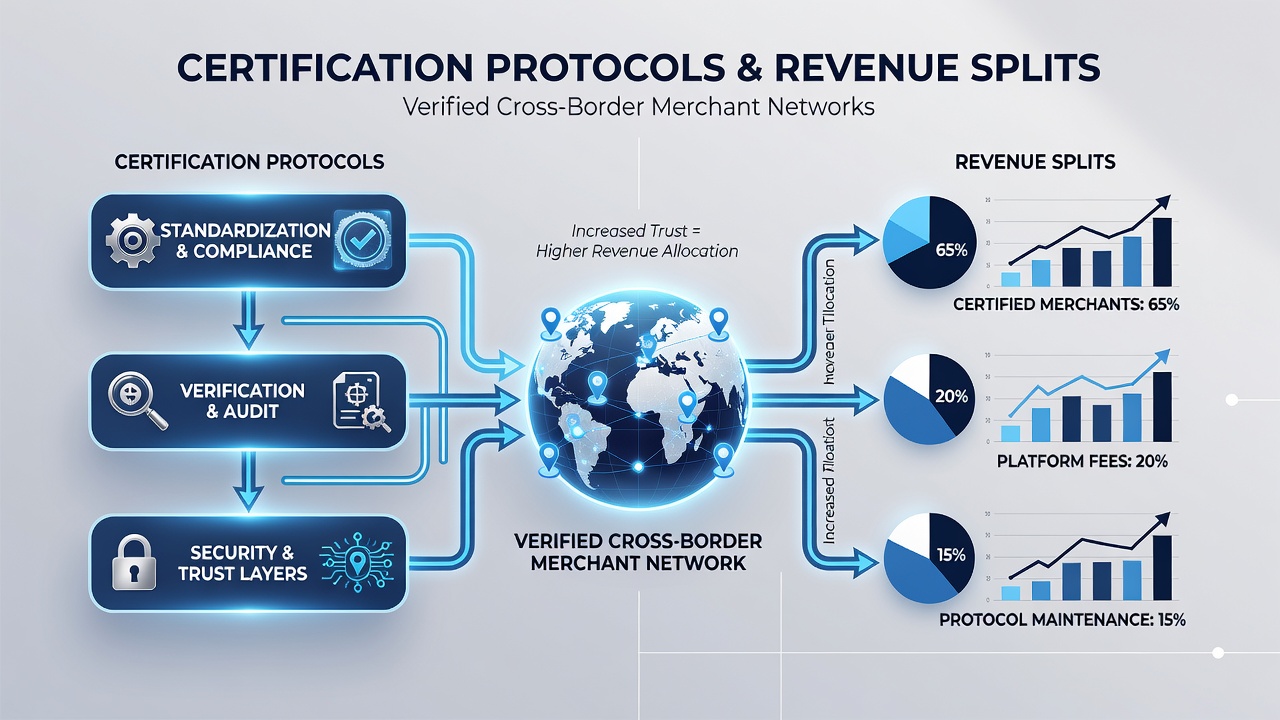
Network operators apply certification tiers as weighting factors in revenue models. A merchant achieving both PCI DSS and SOC 2 Type II status typically qualifies for a 65 to 75 percent share of net transaction revenue, whereas basic PCI SAQ compliance yields only 40 to 50 percent. Observers note that this structure emerges because higher certifications require ongoing audits and infrastructure investments that lower fraud incidence across the entire network.
Payment processors update these formulas annually. In September 2026 the European Payments Council plans to introduce revised guidelines that tie certification renewal frequency to dynamic revenue multipliers, allowing verified merchants to retain additional margin when audit cycles remain under 12 months. Figures from the council indicate early adopters of similar rules in 2024 already experienced a 7 percent average increase in retained earnings.
Regional Variations in Certification Impact
Different jurisdictions apply certification requirements unevenly, which alters cross-border splits. Canadian regulators through the Office of the Superintendent of Financial Institutions emphasize continuous monitoring protocols that add compliance overhead, yet those same rules permit certified Canadian merchants to claim larger slices of revenue when partnering with European networks. Australian Treasury data reveals parallel patterns where merchants maintaining dual certification across PSD2 and local standards secure preferential allocation terms.
One study from the University of Melbourne examined 2,400 merchant accounts operating in both regions and found that dual-certified entities captured 22 percent more of the total fee pool than single-certified counterparts over a 24-month period. The research attributes the difference to reduced chargeback rates that benefit the entire alliance rather than individual parties.
Audit Frequency and Its Direct Link to Profit Division
Audit schedules embedded in certification protocols function as enforcement mechanisms. Networks that mandate quarterly security reviews allocate higher revenue percentages to merchants completing those reviews on schedule. Data indicates that missed audits trigger automatic reductions of 5 to 10 percentage points in the merchant's share until remediation occurs.
Those who've examined transaction ledgers across multiple gateways report that certification-driven adjustments appear most frequently during high-volume quarters, when risk exposure peaks. Processors recalibrate splits in real time using automated scoring systems that pull certification status from centralized registries, eliminating manual negotiation and creating predictable revenue streams for compliant participants.
Future Adjustments Expected in 2026
Upcoming protocol updates scheduled for September 2026 will introduce machine-readable certification tokens that integrate directly into settlement engines. These tokens will allow networks to apply revenue splits instantaneously based on current compliance status rather than periodic reviews. Preliminary models from industry consortia project that this change could reduce administrative disputes over allocation by approximately 30 percent while accelerating fund distribution for verified merchants.
Conclusion
Certification protocols continue to serve as the primary mechanism for calibrating revenue distribution across verified cross-border merchant networks. Evidence from regulatory bodies, academic studies, and transaction data demonstrates that tiered standards, audit cadence, and regional alignment each exert measurable influence on how fees divide among participants. As new token-based verification systems roll out in 2026, these relationships between certification status and profit allocation will become even more automated and transparent.